

Introduction
Black thermoplastic sheets are widely used in applications such as holsters, knife sheaths, and custom molded products. Compared with other colors, black sheets are often available in a wider range of surface textures.
Surface texture plays an important role in both appearance and functionality. It affects grip, scratch resistance, durability, and the overall visual style of the final product.
In this guide, we introduce the most common textures available in black thermoplastic sheets and explain their differences.
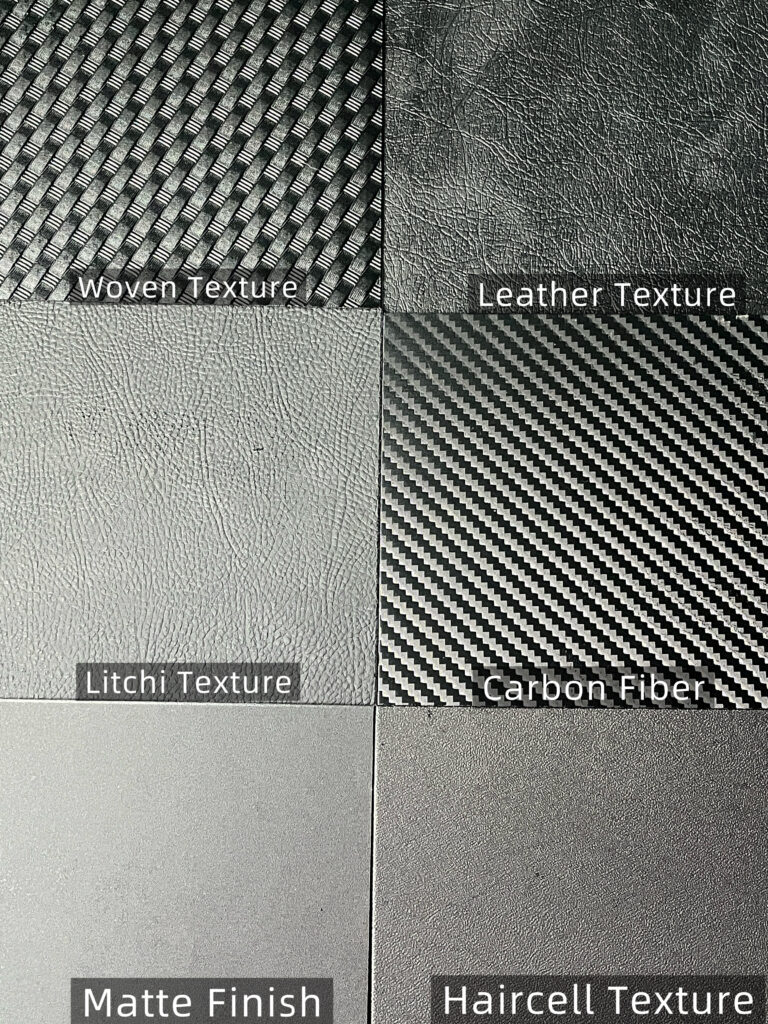
Woven Texture
Woven texture features a clearly defined patterned surface similar to fabric weaving. It has one of the most pronounced surface structures among thermoplastic sheet textures.
Compared to smoother finishes such as matte or litchi, woven texture provides a stronger visual impact and a more tactical, rugged appearance.
Leather Texture
Leather texture mimics the natural grain of leather and offers a more refined and organic surface appearance.
Compared to woven texture, leather texture is less aggressive and more balanced, making it suitable for applications where a premium look is preferred without an overly industrial feel.
Litchi Texture
Litchi texture features a medium, pebbled surface that provides a noticeable but controlled level of grip.
Compared to matte finish, litchi texture offers better tactile feedback. Compared to haircell texture, it appears more subtle and visually softer.
Carbon-Fiber Texture
Carbon-Fiber style texture delivers a directional and technical pattern inspired by carbon fiber surfaces. It creates a modern and performance-oriented visual effect.
Compared to organic textures like leather or litchi, carbon-style texture has a more engineered and structured appearance.
Matte Finish
Matte finish features a very fine and subtle surface texture with minimal visual pattern. It provides a clean, smooth, and non-reflective appearance.
Compared to all other textures, matte finish is the most understated. It is easy to form and is often selected for applications where simplicity and consistency are important.
Haircell Texture
Haircell texture has a more pronounced and slightly coarse surface pattern compared to matte finish. It provides a visible grain that enhances durability and reduces the visibility of scratches.
Compared to litchi texture, haircell appears more technical and less organic. Compared to matte finish, it offers significantly better scratch resistance and a stronger functional character.
Quick Texture Comparison
| Texture | Surface Pattern | Visual Style |
| Woven | Deep, structured pattern | Tactical |
| Leather | Natural leather-like grain | Premium |
| Litchi | Fine-to-medium pebbled texture | Balanced |
| Carbon Fiber | Diagonal embossed pattern | Technical |
| Matte | Very fine micro-texture | Minimal |
| Haircell | Medium-to-coarse industrial grain | Functional |
How to Choose the Right Texture
Choosing the right thermoplastic sheet texture depends on both functional requirements and visual preference.
- For a tactical and bold look → Woven texture
- For a premium and refined appearance → Leather texture
- For enhanced grip and everyday use → Litchi texture
- For a modern and technical style → Carbon-style texture
- For a clean and minimal surface → Matte finish
- For durability and scratch resistance → Haircell texture
CTA:
Not sure which texture is right for your application?
📩Contact us for material recommendations or sample support
📧 Email: pyranox@antnewmaterials.com
💬 WhatsApp: +86 136 8680 0825
If you are experiencing bubbling during heating, read our guide on why thermoplastic sheets bubble when heating.
Why Does Thermoplastic Sheet Bubble When Heating? – Pyranox™ Thermoplastic Sheets
To better understand material performance, you can also check our thermoplastic sheet thickness guide.