

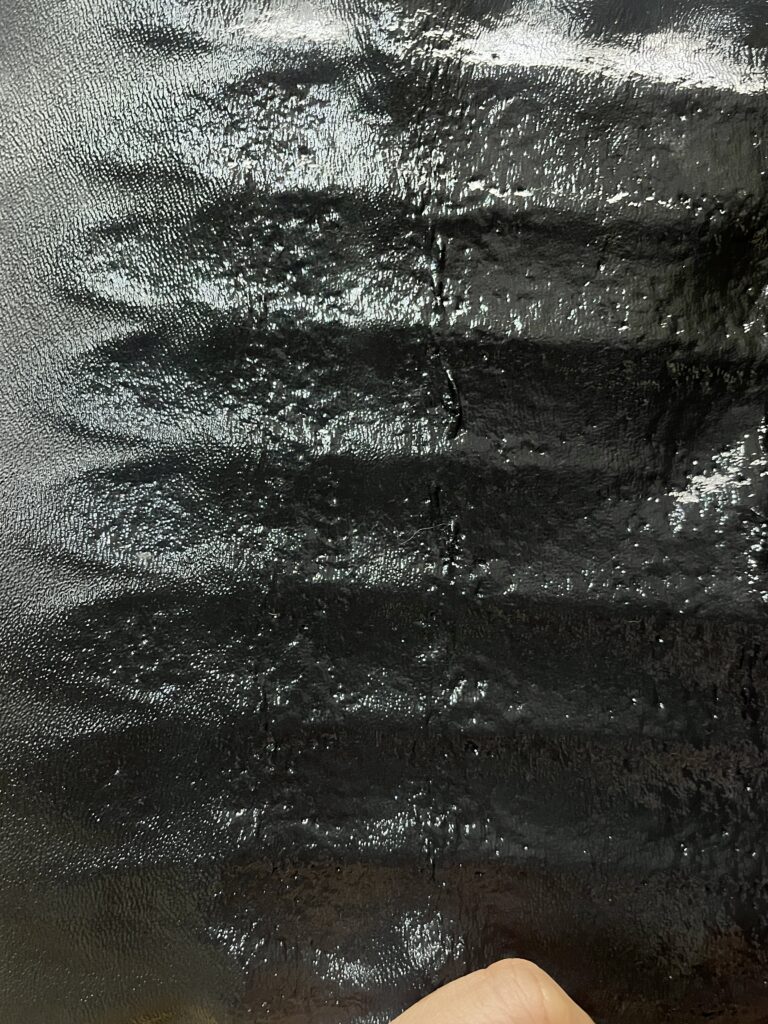
Bubbling in thermoplastic sheets during heating is usually caused by moisture, overheating, or surface contamination.
If you notice surface defects such as pockmarks, glossy patches, or uneven texture, these issues are often related to the heating process rather than the material itself.
1. Moisture Absorption and Outgassing
Cause:
Thermoplastic sheets can absorb moisture from the air over time.
What happens:
When heated, the trapped moisture turns into steam, creating small bubbles or surface defects.
Solution:
Pre-dry the material at 70°C (158°F) for about one hour before forming.
2. Localized Overheating
Another common cause of bubbling is localized overheating.
The issue:
When certain areas of the sheet are exposed to excessive heat—such as when a heat gun is held too close—the temperature may exceed the material’s safe forming range. This can affect the polymer structure and lead to surface changes such as:
- glossy or melted-looking areas
- loss of surface grain texture
- larger irregular bubbles
Recommended practice:
For more consistent results, many manufacturers use a temperature-controlled convection oven, which allows heat to distribute evenly across the sheet.
Using a non-contact infrared thermometer can also help monitor surface temperature and prevent overheating.
3. Surface Contamination
Surface contamination can also contribute to minor bubbling during heating.
The issue:
Dust particles, cutting debris, fingerprint oils, or chemical residues on the surface may react or vaporize under heat, leading to small protrusions or surface irregularities.
Recommended practice:
- Maintain a clean working environment
- Wipe the sheet with a clean, lint-free cloth before heating
- Avoid touching the surface unnecessarily before forming
Good handling practices help ensure a cleaner and more consistent molding result.
Summary:
Bubbling in thermoplastic sheets is typically caused by moisture, uneven heating, or surface contamination. By controlling storage conditions, using proper heating methods, and keeping the surface clean, most bubbling issues can be effectively prevented.
Pyranox™ Recommended Technical Parameters
To achieve stable forming results and maintain the material’s structural integrity, the following parameters are recommended:
Optimal Forming Temperature
165°C – 190°C (330°F – 375°F),
Optional Pre-Drying
70°C (158°F) for approximately 1 hour in humid conditions.
Storage Conditions
Store sheets in a dry, temperature-controlled environment.
Maximum Temperature
Avoid exceeding 200°C (392°F) to prevent material degradation.
Practical Tips for Consistent Forming
Ensure uniform heating
Heating the sheet evenly from edge to edge helps reduce internal stress during forming and cooling.
Observe surface changes carefully
As the sheet approaches forming temperature, the surface may shift from a matte finish to a slight “soft sheen.” This often indicates that the material has reached a workable state.
Work with consistent materials
Using thermoplastic sheets with stable thickness and controlled production quality can help makers achieve more predictable forming results.
The information provided in this guide is intended for general technical reference.
Actual forming conditions may vary depending on equipment and application.
Surface texture can also influence the final forming result. Learn more about thermoplastic sheet textures.
Material thickness also plays a role in heat distribution and forming stability. Check our thermoplastic sheet thickness guide.
Not sure how to avoid bubbling in your application?
📩 Contact us for technical support or sample recommendations.
📧 Email: pyranox@antnewmaterials.com
💬 WhatsApp: +86 136 8680 0825